
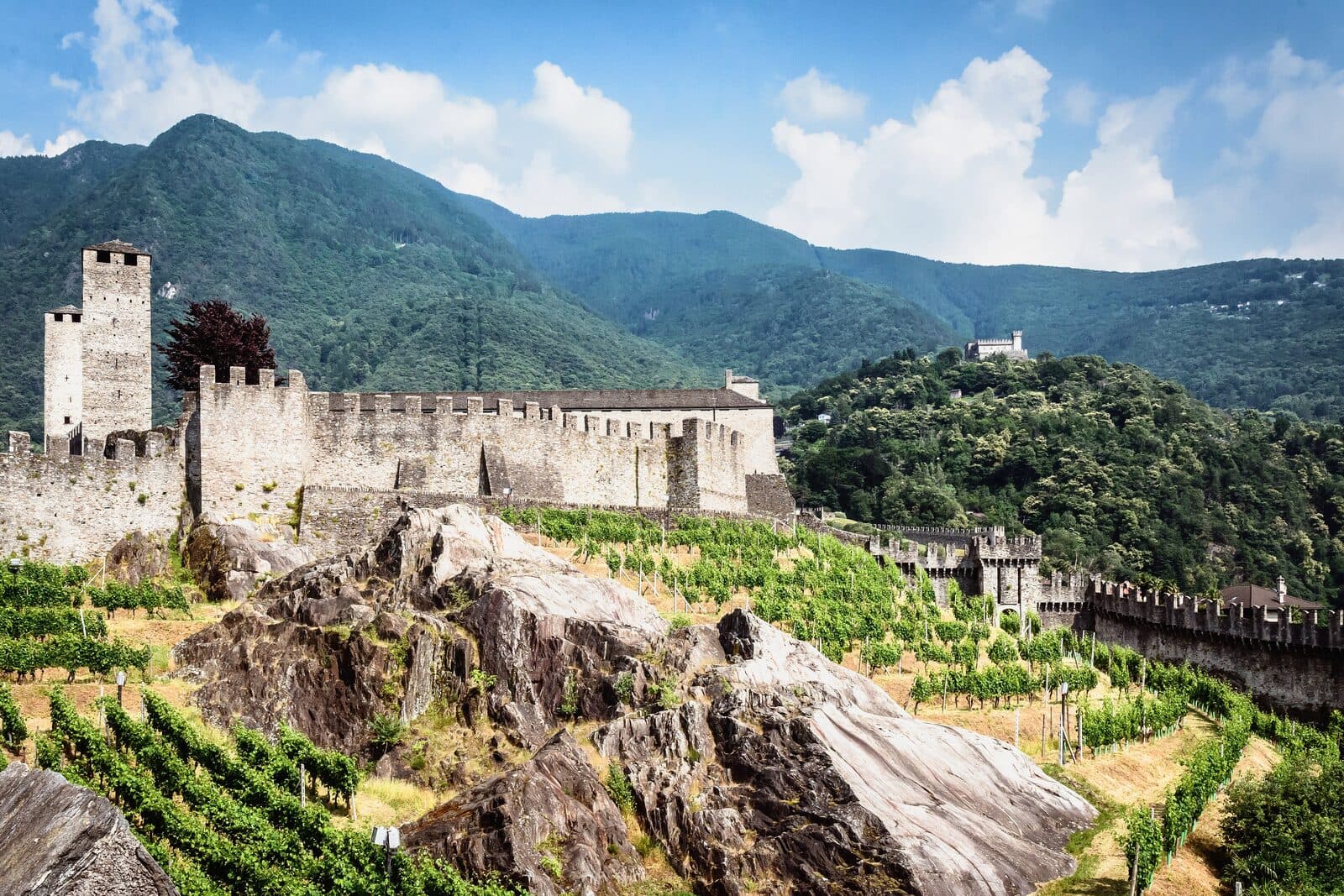
Ticino is the only canton whose sole official language is Italian, so everything you file with its migration office, the Sezione della popolazione in Bellinzona, must be in Italian and your language certificates must be in Italian too. It also has one of the highest numbers of cross-border workers from Italy, which shapes its practice and its tax rules. It is treated as its own "cluster" because it fits neither the German-speaking nor the French-speaking group.
In short
- Your office: the Sezione della popolazione of the Dipartimento delle istituzioni, Bellinzona. Current contacts are at
www4.ti.ch/di/spe. - Italian only: applications, documents from abroad, hearings and decisions are in Italian. German or French certificates do not count as proof of Italian.
- Language levels: A1 spoken for family reunification from a third country; B1 spoken and A1 written for an early C permit; B1 spoken and A2 written for naturalisation. CELI, CILS, PLIDA and fide in Italian are accepted.
- Cross-border workers: Italian nationals get G permits under free movement. A 2020 Switzerland to Italy agreement taxes "existing" and "new" cross-border workers differently.
- Appeals: 30 days to appeal a decision, then 30 days to go to the Tribunale cantonale amministrativo, then possibly the Federal Supreme Court.
Ticino at a glance
Ticino lies south of the Alps. It borders Lombardy (provinces of Como and Varese) and Piedmont (province of Verbano-Cusio-Ossola), and connects to the rest of Switzerland mainly through the Gotthard and San Bernardino routes.
- Population: a good third of a million. Between around a quarter and nearly a third are foreign nationals, above the Swiss average. Italians dominate, followed by Portuguese-speaking, German, Kosovar, Serbian, Turkish and North Macedonian communities, plus a smaller English-speaking group around the Lugano financial centre. The Federal Statistical Office (FSO) and the cantonal statistics office (Ufficio di statistica, USTAT) publish current figures.
- Districts: eight: Bellinzona, Blenio, Leventina, Locarno, Lugano, Mendrisio, Riviera and Vallemaggia.
- Capital: Bellinzona, seat of the cantonal administration.
- Largest city: Lugano, the centre of the Sottoceneri.
- Language: Italian in official and daily life. Ticinese dialects of Lombard are spoken, but authorities write in standard Italian.
Where you live decides which canton handles your case (domicile under Art. 23 CC, Swiss Civil Code, SR 210). Registering a home in Ticino on paper only, to gain an immigration or tax advantage, can be challenged under civil law, as a ground for revocation under Art. 62 FNIA (Federal Act on Foreign Nationals and Integration, SR 142.20), and by the tax authorities.
Everything in Italian
Italian is Ticino's only official language. The Federal Constitution leaves the choice of official language to each canton (Art. 70 Cst., SR 101), and Ticino's constitution of 14 December 1997 made Italian the only one. The details are in the cantonal administrative procedure act (Legge sulla procedura amministrativa, LPamm) and the cantonal implementing rules for the FNIA, available in the cantonal collection of laws at www3.ti.ch/CAN/RLeggi.
In practice:
- Applications: must be in Italian. German or French applications are usually refused or returned for translation. Some offices answer informal questions in another national language, but a binding submission must be in Italian.
- Documents from abroad: birth and marriage certificates, certificates of capacity to marry, criminal-record extracts, diplomas and similar need a certified Italian translation. Translations by sworn translators (traduttori giurati) admitted in Ticino or Italy, or certified by the Swiss consulate in your home country, are usually accepted. Most originals also need an apostille under the Hague Convention of 5 October 1961.
- Hearings (audizioni): in Italian. If your Italian is not good enough, an interpreter is used. Depending on the stage, the authority or you pay.
- Decisions and summonses: in Italian, usually without translation. You are responsible for understanding them, if need be with an Italian-speaking lawyer or an advice centre.
If you move to Ticino from a German- or French-speaking canton, you usually need a new language certificate in Italian and, to protect your rights, often Italian-speaking representation. See language certificates for permits and naturalisation.
The Sezione della popolazione
The Sezione della popolazione of the Dipartimento delle istituzioni handles all residence procedures in Ticino: B, C, L, G, F, Ci, N and S permits, and the cantonal stage of naturalisation. It is based in Bellinzona.
- Official website, with address, phone, email, opening hours and online services:
www4.ti.ch/di/spe - SEM directory of cantonal migration offices:
www.sem.admin.ch, under Contact, then cantonal authorities.
Contact details change, so always use the website. The Sezione has several offices (Uffici) covering, broadly:
- Residence permits: issuing and renewing B, C and L permits, changes of status and family reunification.
- Asylum, removal and enforcement: asylum, removal, F admissions and return counselling.
- Naturalisation: the cantonal stage.
- Cross-border workers (frontalieri): G permits for cross-border workers from Italy, a large area of work.
Italian language certificates
Ticino requires Italian at the level set by federal law. For permits, the rules are Art. 58a para. 1 let. c FNIA with Art. 77d OASA (Ordinance on Admission, Residence and Gainful Employment, SR 142.201). For naturalisation, Art. 11 let. a SCA (Swiss Citizenship Act, SR 141.0) makes integration a requirement, and Art. 6 SCO (Citizenship Ordinance, SR 141.01) sets the level.
Accepted certificates usually include:
- CELI (Certificato di Conoscenza della Lingua Italiana), Università per Stranieri di Perugia;
- CILS (Certificazione di Italiano come Lingua Straniera), Università per Stranieri di Siena;
- PLIDA (Progetto Lingua Italiana Dante Alighieri), Società Dante Alighieri;
- fide in Italian;
- other certificates listed in Art. 77d OASA and on the current cantonal list.
| Situation | Federal minimum | Accepted |
|---|---|---|
| B permit, family reunification, third country | A1 spoken (Art. 58a FNIA with Art. 77d OASA) | CELI, CILS, PLIDA, fide IT |
| Early C permit (after 5 years with successful integration) | B1 spoken, A1 written (Art. 34 para. 4 FNIA with Art. 62 para. 1bis OASA) | CELI, CILS, PLIDA, fide IT |
| Ordinary naturalisation | B1 spoken, A2 written (Art. 11 let. a SCA with Art. 6 SCO) | CELI, CILS, PLIDA, fide IT |
These are minimums. The early C permit is not guaranteed: it requires successful integration and is at the office's discretion. Check the Sezione's website for the current list; new providers are added from time to time.
Cross-border workers
Ticino, with Geneva, has more cross-border workers (G permit, permesso G) than any other canton, several tens of thousands. The FSO publishes the figure quarterly in its cross-border worker statistics (STAF). Most come from the provinces of Como, Varese, Verbano-Cusio-Ossola and Lecco, and cross daily at Chiasso to Como, Stabio to Gaggiolo and Ponte Tresa.
The G permit
Italian nationals are covered by the Agreement on the Free Movement of Persons between Switzerland and the EU (AFMP, SR 0.142.112.681) and receive G permits under the AFMP and its implementing ordinance (OFMP, SR 142.203). Cross-border workers from outside the EU are rare in Ticino and fall under the FNIA rules on G permits (Art. 35 FNIA). See the G cross-border permit.
Tax and social security agreements
This is an outline only, to place the rules in context:
- Double-taxation agreement between Switzerland and Italy (DTA CH to I), revised several times.
- Agreement between Switzerland and Italy on the taxation of cross-border workers of 23 December 2020 (Accordo sui lavoratori frontalieri), replacing the 1974 agreement. The Federal Tax Administration (FTA) publishes its entry into force and current text. It distinguishes:
- "existing" cross-border workers, already working as cross-border workers in Ticino, Graubünden or Valais before the cut-off date: taxed at source in Switzerland as before, with part of the tax paid over to Italian border municipalities;
- "new" cross-border workers, who started after the cut-off date: taxed in both Switzerland (a limited tax at source) and Italy, which credits the Swiss tax.
- EU Regulation 883/2004 on social security coordination (applied through Annex II of the AFMP) decides where cross-border workers are insured and which country's health insurance obligation applies. The option to be health-insured in Italy is complicated.
For questions on tax liability, tax credits, the health insurance option or social security, ask a qualified tax adviser, the Italian Agenzia delle Entrate, the Ticino tax administration (Divisione delle contribuzioni) or the Cassa cantonale di compensazione AVS/AI.
What this means for your permit
- The Sezione handles many G permits, renewals and changes of status (G to B to C, if you qualify).
- Moving from a G to a B permit, by taking up residence in Ticino, usually has tax and social security effects that you should clarify at the same time.
- The office often checks whether a cross-border worker really lives in Italy (the centre of life under Art. 23 CC) rather than in Switzerland. A paper-only residence in Italy to obtain better tax treatment as a G holder causes problems under both tax and immigration law.
Integration agreements
The canton can conclude an integration agreement (accordo d'integrazione) under Art. 58b FNIA with third-country nationals who show integration gaps. Cantons use this federal tool differently. In Ticino it is reportedly used sparingly:
- not for every third-country permit, but case by case, typically when gaps appear at renewal or in family reunification;
- it usually requires Italian courses (A1 to B1 depending on your level), integration courses and proof of work;
- failing to meet it can be a ground for revocation under Art. 62 let. g FNIA, but in practice it is rarely the only ground relied on.
Practice can change; the Sezione's current approach counts. See the integration agreement under Art. 58b FNIA.
Regions within Ticino
Sopraceneri and Sottoceneri
- Sopraceneri (north: Bellinzona, Blenio, Leventina, Locarno, Riviera, Vallemaggia): more rural, an older population, fewer migrants. The main towns are Bellinzona (enlarged by municipal mergers since 2017) and Locarno.
- Sottoceneri (south: Lugano and Mendrisio): more urban and densely populated, the economic engine. The main towns are Lugano and Mendrisio. The financial centre and most cross-border workers are here.
The Sezione is centralised in Bellinzona, so this split does not change cantonal procedure. It matters for municipal practice, especially naturalisation, and for access to advice centres.
Italian-speaking Swiss partners
Most of the population are Swiss citizens whose first language is Italian, from Ticino or Italian-speaking Graubünden. They often appear as the partner in family cases: marriage with a third-country or EU national, family reunification, or the spouse's naturalisation. The incoming partner still has to meet the Italian language requirements above.
Political rights for foreign nationals
Ticino sits in the middle: foreign nationals have fewer rights than in some French-speaking cantons such as Jura and Neuchâtel, but more than in most German-speaking cantons.
- Municipal level: C permit holders who have lived here for a long time have a limited right to vote, with cantonal and municipal waiting periods. Ticino has held several popular votes on widening or narrowing it, so check current cantonal law.
- Cantonal level: no voting rights for foreign nationals.
These rights do not decide immigration cases directly, but political participation can be one indicator of integration under Art. 58a FNIA and in naturalisation.
Tax at source
This section explains tax only as it affects your stay.
- Tax at source (imposta alla fonte): a cantonal tax, harmonised under the Tax Harmonisation Act (THA, SR 642.14), charged at the cantonal rate. It applies mainly to people without a C permit, especially B holders, and to cross-border workers. It is not the federal withholding tax on investment income.
- Cross-border workers: taxed under the DTA and the 2020 agreement, with different rules for "existing" and "new" workers affecting the tax at source, which country may tax, and crediting and refunds.
- Subsequent ordinary assessment: if you live in Switzerland and are taxed at source, it is compulsory above CHF 120,000 gross a year, the same threshold across Switzerland. Below it, you can apply under the legal conditions. The rules are in the Federal Act on Direct Federal Tax (DFTA, SR 642.11), the THA and cantonal law; the Divisione delle contribuzioni has the current details.
For tax questions, including double taxation between Switzerland and Italy, ask a qualified tax adviser, the Divisione delle contribuzioni or the Agenzia delle Entrate. Cross-border cases usually need advice on both sides of the border.
Finding a lawyer
- Ordine degli avvocati del Cantone Ticino (OATi): the bar association of lawyers on the Ticino register. It keeps a list with specialisations and languages.
- Camera per l'avvocatura e il notariato: the cantonal supervisory authority for lawyers and notaries under Art. 14 LLCA (Lawyers Act, SR 935.61), attached to the Tribunale d'appello. You can inspect register entries and disciplinary measures there.
- Contacts: on
www.ti.chand through the OATi secretariat.
For an immigration case in Ticino, look for a lawyer who works in Italian and, if you are a cross-border worker, who knows international tax and social security law (DTA, the 2020 agreement, EU Regulation 883/2004) or works with tax advisers.
Asylum
Asylum in Ticino centres on the Federal Asylum Centre (FAC) of the Ticino asylum region. Asylum seekers whose case belongs to this region go there first; they are later allocated to a canton under the SEM key (Art. 27 AsylA, Asylum Act, SR 142.31).
The legal protection service for asylum and removal cases in the Ticino region is SOS Ticino, Consultorio giuridico, which provides the legal representation foreseen by federal law (Art. 102f ff. AsylA). Its address, phone, email, hours and mandate status are on www.sos-ti.ch. Asylum regions change from time to time, so check the SEM and SOS Ticino websites for the current set-up.
Advice centres and emergencies
- SOS Ticino, Consultorio giuridico: besides asylum, it helps with other immigration questions (B, C, L, G, family reunification, naturalisation) as capacity allows.
- Caritas Ticino: based in Lugano with regional offices. Advice on social and administrative matters for migrants, including people without regular status. Contacts are on its website.
These national short numbers work in Ticino, in Italian:
- 142: AppElle, help with domestic violence.
- 143: The Helping Hand (Telefono Amico), listening and psychosocial support.
- 147: Pro Juventute, for children and young people.
- Women's shelters (Case delle donne): emergency places for women and children affected by violence in the Sopraceneri and Sottoceneri. The cantonal services and the organisations' websites have current numbers.
If you are in immediate danger, call the police on 117 or an ambulance on 144, and for domestic violence also 142. See crisis help for domestic violence and divorce and your residence permit (Art. 50 FNIA).
Naturalisation
Ordinary naturalisation follows the Swiss Citizenship Act (SCA), the Citizenship Ordinance (SCO) and Ticino's citizenship act (Legge sulla cittadinanza ticinese e sull'attinenza comunale). Check the current title and articles in the cantonal collection of laws.
Language level
The federal minimum is B1 spoken and A2 written in Italian. The integration requirement comes from Art. 11 let. a SCA and the exact level from Art. 6 SCO. Ticino follows the federal standard with no documented tightening, and accepts the certificates listed above.
The municipal stage
The municipality (comune) decides whether to grant municipal citizenship (attinenza comunale), which you need for the cantonal and federal stages. Procedures differ:
- in larger municipalities (Lugano, Bellinzona, Locarno, Mendrisio), the Municipio (municipal council) usually decides after a citizenship commission has examined your file;
- in some smaller municipalities, you have a hearing before a citizenship commission or the Municipio;
- a hearing in Italian can be a real hurdle if your spoken Italian is not strong.
Ask your municipality how it works before you apply.
Appeals
You can challenge a decision of the Sezione della popolazione in three steps:
- First appeal: within 30 days of notification, under the LPamm and the FNIA. It usually goes to the Consiglio di Stato (the cantonal government) or a designated department office. Check cantonal law for the exact body, as this can change.
- Tribunale cantonale amministrativo (TCA): within 30 days of notification of the first appeal decision. The TCA is Ticino's highest administrative court.
- Federal Supreme Court: if the conditions are met, an appeal in public-law matters under Art. 82 ff. of the Federal Supreme Court Act (FSCA, SR 173.110), to the court in Lausanne. In some immigration cases this appeal is excluded (Art. 83 FSCA), and a subsidiary constitutional appeal (Art. 113 FSCA) may be possible instead.
Filing on time and in the right form matters, so work with an Italian-speaking lawyer on the Ticino register. See the appeal pathway.
Related pages
- Glossaries: FNIA and OASA, Asylum Act, 2018 Citizenship Act, AFMP and OFMP, data protection (revFADP)
- Other cantons: Geneva, which also has many cross-border workers; Zurich; French-speaking standard-practice cantons; German-speaking standard-practice cantons
- Life events: changing canton (Art. 37 FNIA), hardship cases (Art. 30 FNIA), marrying a Swiss citizen, family reunification with a Swiss citizen (Art. 42 FNIA)