
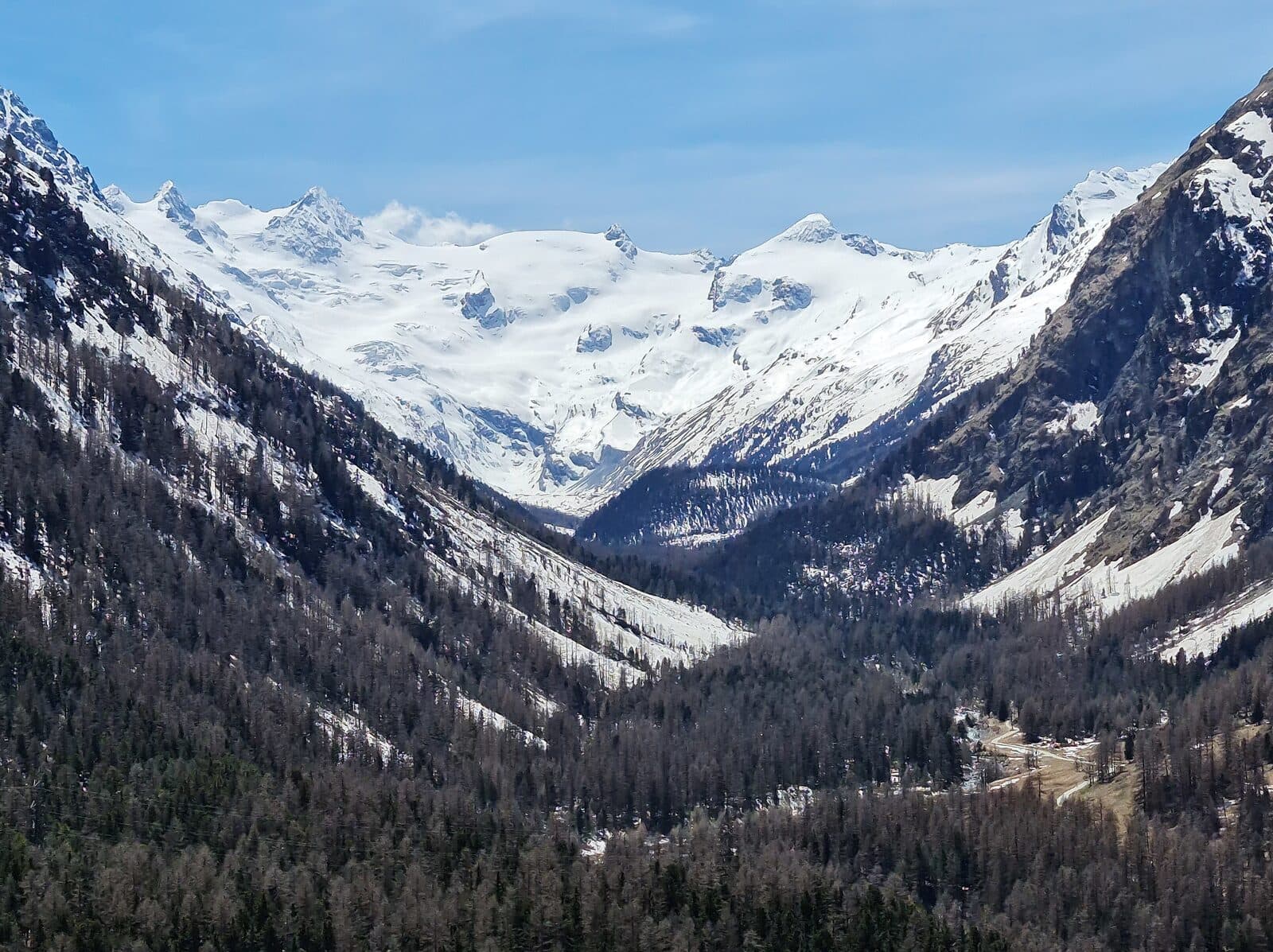
If you live in Graubünden, your residence permits, renewals, family reunification and settlement applications are handled by the Office for Migration and Civil Law of Graubünden (Amt für Migration und Zivilrecht, AMZ) in Chur. The canton applies federal immigration law, but it is the only trilingual canton: German, Italian and Romansh are all official, and the language that counts for you is the one spoken where you live. Seasonal tourism work also makes short-term L permits unusually common here.
In short
- Your office: the AMZ in Chur, online at https://www.gr.ch/afm. Your municipality's residents' office handles your arrival registration.
- Processing time: around six weeks for a complete, straightforward application. First B permits, C permits and family reunification take longer.
- Language: German, Italian or Romansh, depending on your region. Family reunification from a third country usually needs A1 spoken; an early C permit needs B1 spoken and A1 written, and naturalisation needs B1 spoken and A2 written.
- Naturalisation: the Confederation, the canton and your municipality must all agree, and municipal practice varies widely.
- Tax: without a C permit you are usually taxed at source; above CHF 120,000 gross a year, an ordinary assessment follows automatically.
Graubünden at a glance
Graubünden (Grisons in French, Grigioni in Italian, Grischun in Romansh) is the largest Swiss canton by area but thinly populated. It has around 200,000 residents, of whom around one fifth do not hold Swiss citizenship. The capital is Chur. For exact, current figures, check the Federal Statistical Office (FSO) or the cantonal statistics.
The AMZ works mainly in German. In the Italian-speaking southern valleys (Misox, Calanca, Bergell, Puschlav) and in the Romansh-speaking valleys, the local language affects your correspondence, your language certificate and which municipal office you deal with.
The economy rests on tourism and energy. Resorts such as Davos, St. Moritz and Klosters need many seasonal hotel and restaurant workers, which is why L permits play a larger role here than in most cantons. Life in remote alpine villages also looks quite different from life in Chur.
Which law applies
Graubünden applies federal law first:
- the Federal Act on Foreign Nationals and Integration (FNIA, SR 142.20);
- the Ordinance on Admission, Residence and Gainful Employment (OASA, SR 142.201);
- for EU/EFTA nationals, the Agreement on the Free Movement of Persons (AFMP, SR 0.142.112.681) and its implementing ordinance (VEP, SR 142.203);
- the Asylum Act (AsylA, SR 142.31);
- SEM directives and practice.
The most important rules are admission for work (Art. 18 FNIA), for education (Art. 27 FNIA), family reunification (Art. 42 to 47 FNIA), the settlement permit (Art. 34 FNIA), and revocation and expiry (Art. 62 and 63 FNIA). Some cantonal decisions also need approval from the State Secretariat for Migration (SEM) under Art. 99 FNIA.
The canton adds its own introductory law on foreign nationals and asylum, a cantonal Citizenship Act, and administrative-procedure law, which governs appeals against AMZ decisions. For the current titles and numbers, check the cantonal collection of laws (Bündner Rechtsbuch).
The glossaries explain the federal terms: FNIA and OASA, AFMP and the Asylum Act.
The migration office
The AMZ in Chur handles all residence procedures: B, L and C permits, family reunification, change of status and revocation. It also works with municipalities (arrival registration) and with the SEM (federal approval and asylum).
- Online: https://www.gr.ch/afm
- Address, email, phone and opening hours: these change, so take them from the official portal or the SEM directory of cantonal migration offices.
You also register your arrival with the residents' office of your municipality. Chur, Davos, Landquart and every other municipality have their own office; check your municipality's website.
How long it takes
These are rough estimates, not promises. Times depend on how complete your file is, how busy the office is, the tourist high season and your situation. A complete, straightforward application takes around six weeks.
| Procedure | Rough duration |
|---|---|
| B renewal | about 4 to 6 weeks |
| First B permit (work, family reunification) | about 6 to 12 weeks |
| L short stay (e.g. seasonal work) | about 4 to 8 weeks |
| C permit, ordinary (after 10 years, Art. 34 para. 2 FNIA) | about 8 to 14 weeks |
| C permit, early (after 5 years, Art. 34 para. 4 FNIA) | about 8 to 16 weeks |
| Family reunification, third country (Art. 43 to 47 FNIA) | about 8 to 16 weeks |
The AMZ portal has the official times, and the office's information prevails. Where SEM approval is needed (Art. 99 FNIA), add several weeks to months. Missing documents, a language certificate sent later or criminal-record checks from abroad can add more.
Language requirements
The AMZ works mainly in German, but Italian and Romansh have equal status in the regions where they are spoken. You can prove your skills in German, Italian or Romansh; which one you need depends on where you live. Levels follow the Common European Framework of Reference for Languages (CEFR).
- Family reunification from a third country: for a B permit, you usually need A1 spoken in the local official language. The exact level follows federal law and the current SEM directive.
- Early C permit (Art. 34 para. 4 FNIA with Art. 62 para. 1bis and Art. 77d OASA): usually B1 spoken and A1 written in a cantonal official language. This is a minimum, not a guarantee: the canton decides at its discretion.
The fide certificate is accepted, as are the diplomas listed in Art. 77d OASA at the right level. Ask the AMZ or the fide office which Romansh certificates are recognised and which certificate types they accept. See language certificates (A1, A2, B1, fide).
B, L and C permits
Graubünden follows the federal rules and SEM directives. Its particularities are about procedure, languages and seasonal work, not different legal conditions.
- B permit, EU/EFTA: residence under free movement (AFMP and VEP), for workers and non-workers.
- B permit, third-country nationals: for work under Art. 18 FNIA (quotas and priority for resident workers), for education under Art. 27 FNIA, for family reunification under Art. 42 to 47 FNIA, or as a hardship case under Art. 30 para. 1 let. b FNIA.
- L permit (EU/EFTA and third countries): short, time-limited stays. In Graubünden it is widely used for seasonal work in hotels and restaurants. Language certificates in any cantonal official language are accepted.
- C permit, ordinary (Art. 34 para. 2 FNIA): usually after ten years of residence.
- C permit, early (Art. 34 para. 4 FNIA with Art. 62 para. 1bis OASA): after five years if you are well integrated and meet the higher language level. The canton decides at its discretion; you have no legal right to it.
See the B residence permit, the L short-stay permit and the C settlement permit.
Naturalisation
Three levels
To become Swiss, you need approval at three levels: the Confederation, the Canton of Graubünden (under its Citizenship Act) and your municipality. The Confederation grants its naturalisation authorisation only once the cantonal and municipal requirements have been checked.
Federal requirements
The Swiss Citizenship Act (SCA, SR 141.0, in force since 1.1.2018) and the Swiss Citizenship Ordinance (SCO, SR 141.01) set the federal rules. You need ten years of residence in Switzerland (Art. 9 SCA), successful integration (Art. 12 SCA), and you must not threaten Switzerland's internal or external security (Art. 11 SCA). The language level, set in Art. 6 SCO, is B1 spoken and A2 written in a national language: in Graubünden, German, Italian or Romansh depending on your region.
Cantonal and municipal requirements
The cantonal Citizenship Act requires several years of residence in the canton, and your municipality sets its own residence period. Check both in the current cantonal act and your municipality's regulation. Depending on the municipality, you may face a naturalisation commission, a personal interview or both. Graubünden's many municipalities are very independent, so practice differs widely: ask your municipal office what applies to you.
See pathways to Swiss citizenship and the 2018 Citizenship Act glossary.
Asylum
In the accelerated asylum procedure (Art. 26b ff. AsylA), Graubünden belongs to one of the asylum regions whose Federal Asylum Centres (FAC) the SEM runs. The SEM (sem.admin.ch) lists which region and centre apply. If an application moves to the extended procedure (Art. 26d AsylA), cantons receive cases under the SEM distribution key (Art. 27 AsylA), with Graubünden taking a share based on its population.
The legal advice services and organisations mandated or recognised by the SEM under Art. 102f AsylA change over time. Find the current organisation for Graubünden through the SEM or the Swiss Refugee Council (osar.ch). Representation in asylum cases is their job and that of lawyers.
See the Asylum Act glossary, the N permit, provisional admission (F permit) and protection status S.
Tax at source and debts
If you hold a B permit, as a third-country or EU/EFTA national, and no C permit, tax on your salary is usually deducted at source by your employer. This rests on the Federal Act on Direct Federal Taxation, the Tax Harmonisation Act (StHG, SR 642.14) and the Graubünden tax act; cantonal and municipal taxes make up most of the bill.
- Above CHF 120,000 gross a year: a subsequent ordinary assessment (NOV) is carried out automatically.
- Below that: the tax at source is usually final, but you can apply for an ordinary assessment under the conditions set by tax law.
- When it ends: once you get a C permit or marry a Swiss citizen, you are taxed by ordinary assessment.
Tax rates differ a lot between municipalities. For tax questions, ask the cantonal tax administration of Graubünden or a qualified tax adviser.
Taxes matter for your permit only indirectly. Tax debts or debt-enforcement proceedings alone do not lead to revocation. Serious debt that is your own fault can count against you in the integration assessment, which can make a renewal or a change of status harder. The revocation grounds in Art. 62 and 63 FNIA mainly concern security and public order. See debt enforcement and residence rights.
Largest municipalities
- Chur: capital and administrative centre
- Davos: tourism and congress town
- St. Moritz: international resort
- Landquart: business and transport hub at the entrance to the canton
- Ilanz: centre of the Surselva
Figures such as the share of foreign residents, rents or permit fees change often. Use the FSO or cantonal statistics for population data and the official fee schedule and AMZ portal for fees.
Getting legal help
This page explains the law and normal cantonal practice. It is not individual legal advice. For a hardship case (Art. 30 para. 1 let. b FNIA), a family reunification problem or an appeal against an AMZ decision, contact a lawyer entered in the cantonal bar register.