
In the Canton of Valais, residence permits are handled by the Service de la population et des migrations, in German the Dienststelle für Bevölkerung und Migration (SPM). Valais is bilingual: French in Lower Valais and German in Upper Valais, and you deal with the office and prove your language skills in the official language of the region where you live. The law itself is federal and the same in every canton.
In short
- Your authority: the SPM, at https://www.vs.ch/spm. Take the address, opening hours and online services from that page, as they change.
- Language depends on where you live: French in Lower Valais, German in Upper Valais. Documents in other languages usually need a certified translation.
- Processing time: roughly six weeks as a non-binding guide. If the State Secretariat for Migration (SEM) must approve, add its time.
- Early C permit after five years needs oral B1 and written A1 in your region's language.
- Naturalisation has federal, cantonal and communal levels, and all three must be met.
Valais at a glance
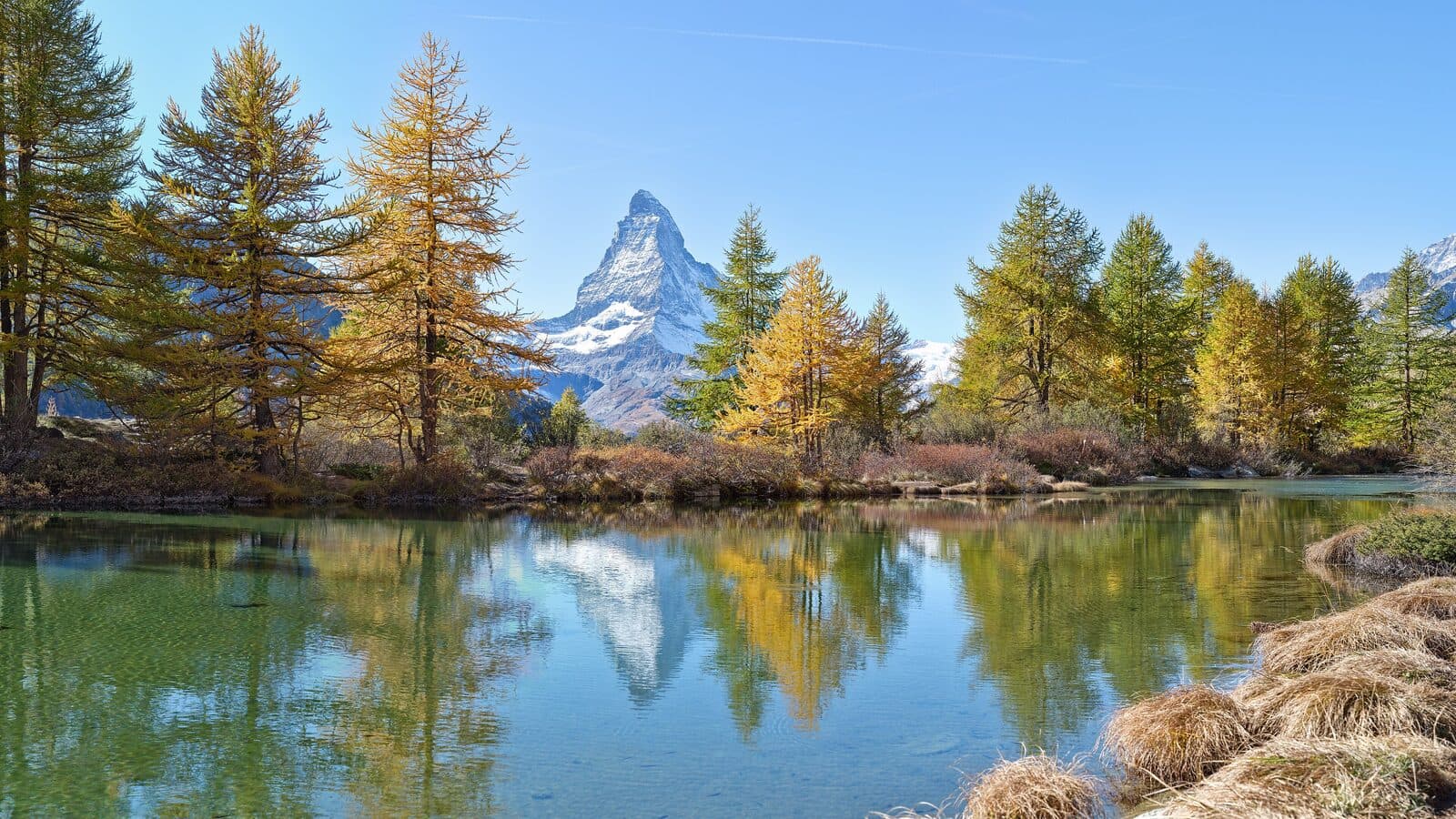
Valais (Wallis in German, Vallese in Italian) runs from the Rhône valley to the Matterhorn in southern Switzerland. French dominates in the western, lower part and German in the eastern, upper part. The capital is Sion (Sitten). Several hundred thousand people live here, and roughly a quarter do not hold Swiss citizenship; for current figures see the Federal Statistical Office (FSO) or the cantonal statistics office.
The economy rests on wine, tourism (especially winter sports and mountain tourism) and hydropower. Tourism creates strong seasonal demand for fixed-term permits. The largest municipalities are Sion, Sierre, Monthey and Martigny in French-speaking Lower Valais, and Brig-Glis in German-speaking Upper Valais. Rents vary widely between valley towns and tourist resorts; check cantonal statistics or rent indices for current figures.
Your migration office: the SPM
The SPM handles all residence procedures in Valais. Its place within the cantonal administration can change; the official page at https://www.vs.ch/spm shows the current set-up, contact details, opening hours and online portal.
Submit applications, documents and letters in the official language of your region: French in Lower Valais, German in Upper Valais. Foreign-language documents usually need a certified translation. Ask the SPM which language and which counter apply to your municipality.
The law that applies
Valais applies federal law first:
- Federal Act on Foreign Nationals and Integration (FNIA, SR 142.20): work (Art. 18), study (Art. 27), hardship cases (Art. 30 para. 1 let. b), B permit and renewal (Art. 33), C permit ordinary and early (Art. 34 para. 2 and para. 4), change of canton (Art. 37), family reunification (Art. 42 to 47), rights after a marriage or family breaks up (Art. 50), integration (Art. 58a and 58b), revocation (Art. 62 and 63) and SEM approval (Art. 99).
- Ordinance on Admission, Residence and Gainful Employment (OASA, SR 142.201): hardship (Art. 31), language (Art. 60 para. 2, 62 para. 1bis and 77d) and family reunification (Art. 73).
- Agreement on the Free Movement of Persons (AFMP, SR 0.142.112.681) and its implementing ordinance (OFMP) for EU/EFTA nationals.
- Asylum Act (AsylA, SR 142.31).
- Swiss Citizenship Act (SCA, SR 141.0) and Swiss Citizenship Ordinance (SCO, SR 141.01).
Valais also has its own implementing law on foreign nationals and integration, a cantonal citizenship act and administrative procedure law. They are revised often; find the current versions in the Recueil systématique de la législation valaisanne, the canton's collection of laws. For the federal terms, see the FNIA and OASA terminology glossary, the AFMP/OFMP glossary and the glossary on the Asylum Act.
How long it takes
The SPM does not consistently publish processing times. Cantonal sources give roughly six weeks for general processing as a non-binding guide. First applications for work or family reunification tend to take longer, simple renewals less. It depends on how complete your file is, the office's workload, the language region and how complex your case is.
Two things can add time:
- If the SEM must approve the cantonal decision (Art. 99 FNIA), this can add weeks to months.
- Waiting for language certificates, or foreign criminal-record or civil-status documents, can hold up the procedure. Seasonal peaks in tourism can also slow things down.
For current indications, ask the SPM.
Language requirements
The relevant language is the official language of your region: French in Lower Valais, German in Upper Valais. Your municipality or the SPM can confirm which applies.
| Situation | Level (CEFR) | Legal basis |
|---|---|---|
| Family reunification from a third country | A1 oral, or proof that you signed up for a language course | Art. 58a and 58b FNIA with Art. 73 OASA and following |
| Early C permit after five instead of ten years | B1 oral and A1 written | Art. 34 para. 4 FNIA with Art. 62 para. 1bis and Art. 77d OASA |
Whether you may prove your skills in the other national language (French instead of German, or the reverse) depends on cantonal practice and SEM guidance. Ask the SPM.
Accepted proofs are the Swiss fide certificate (in French or German) and the diplomas recognised under Art. 77d OASA, such as DELF/DALF for French or Goethe or telc for German. Check the current list with fide or the SPM. See proof of language skills (fide).
Permits: B, L and C
Valais applies the standard federal practice under the FNIA, the OASA and SEM guidance:
- B residence permit: EU/EFTA nationals get it under the AFMP and OFMP. Third-country nationals must meet the rules for admission to work (Art. 18 FNIA), including the labour-market conditions, quotas and SEM approval (Art. 99 FNIA). See the B residence permit.
- L short-term permit: for fixed-term jobs and for education and training (Art. 27 FNIA). Tourism and winter sports in Valais create strong seasonal demand. See the L short-term permit.
- C settlement permit: normally after ten years (Art. 34 para. 2 FNIA), or early after five years if you are well integrated (Art. 34 para. 4 FNIA with Art. 62 para. 1bis OASA) and meet the language level above. Early grant is a possibility, not a right. See the C settlement permit.
Naturalisation
Naturalisation has three levels, and you must meet all of them: federal approval under the SCA and SCO, Valais cantonal citizenship under the cantonal citizenship act, and citizenship of your municipality.
- Federal requirements: a minimum period of residence and a C permit (Art. 9 SCA), successful integration and familiarity with Swiss life (Art. 11 and 12 SCA).
- Language: oral B1 and written A2 in a national language (Art. 6 SCO), in Valais French or German depending on your region.
- Cantonal and communal residence: Valais and your municipality may require you to have lived there for a minimum time. This varies; check the cantonal citizenship act and ask your municipality.
See the glossary on the Swiss Citizenship Act and Naturalisation in Switzerland.
Asylum
Asylum procedures are federal and run by the SEM. Valais is one of the cantons that receive people in the extended asylum procedure under the SEM allocation key (Art. 27 AsylA). It belongs to one of the six federal asylum regions; which region and which federal asylum centre serve Valais are listed on sem.admin.ch. The organisation mandated to provide legal advice and representation in the region (Art. 102f AsylA) is also listed there and by the Swiss Refugee Council (OSAR).
See the N residence permit during the asylum procedure, provisional admission (F permit) and S protection status.
Tax at source and your permit
If you work on a B or L permit, your employer usually deducts tax at source (impôt à la source, Quellensteuer) from your salary. This is set by Valais tax law within the federal harmonisation rules. If your gross employment income is above CHF 120,000 a year, you are automatically assessed through a subsequent ordinary assessment; below that the tax at source is in principle final, but you can ask for an ordinary assessment. The cantonal tax administration of Valais can confirm the threshold, rates and deadlines, and answer tax questions.
For advice on your own case, contact a lawyer entered in the cantonal bar register.