
In the Canton of Schaffhausen, all residence permits are handled by the Migration Office of the Canton of Schaffhausen (Migrationsamt). The official language is German, so your language proof must be in German. The law is the same federal law as everywhere in Switzerland; this page explains the local office and its practice.
In short
- Your authority: the Migration Office,
https://www.sh.ch/de/verwaltung/aemter-behoerden/migrationsamt.html. Take the address, phone, email and opening hours from that page. - Language: German (standard German, not Swiss German). Early C permit: oral B1 and written A1.
- Processing time: around 4 weeks for the cantonal part as a rough guide. SEM approval can add weeks to months.
- Border canton: Schaffhausen is almost surrounded by Germany, so G cross-border permits are common.
- Tax at source applies if you work without a C permit. Above CHF 120,000 gross a year, a full tax return follows automatically.
Schaffhausen at a glance
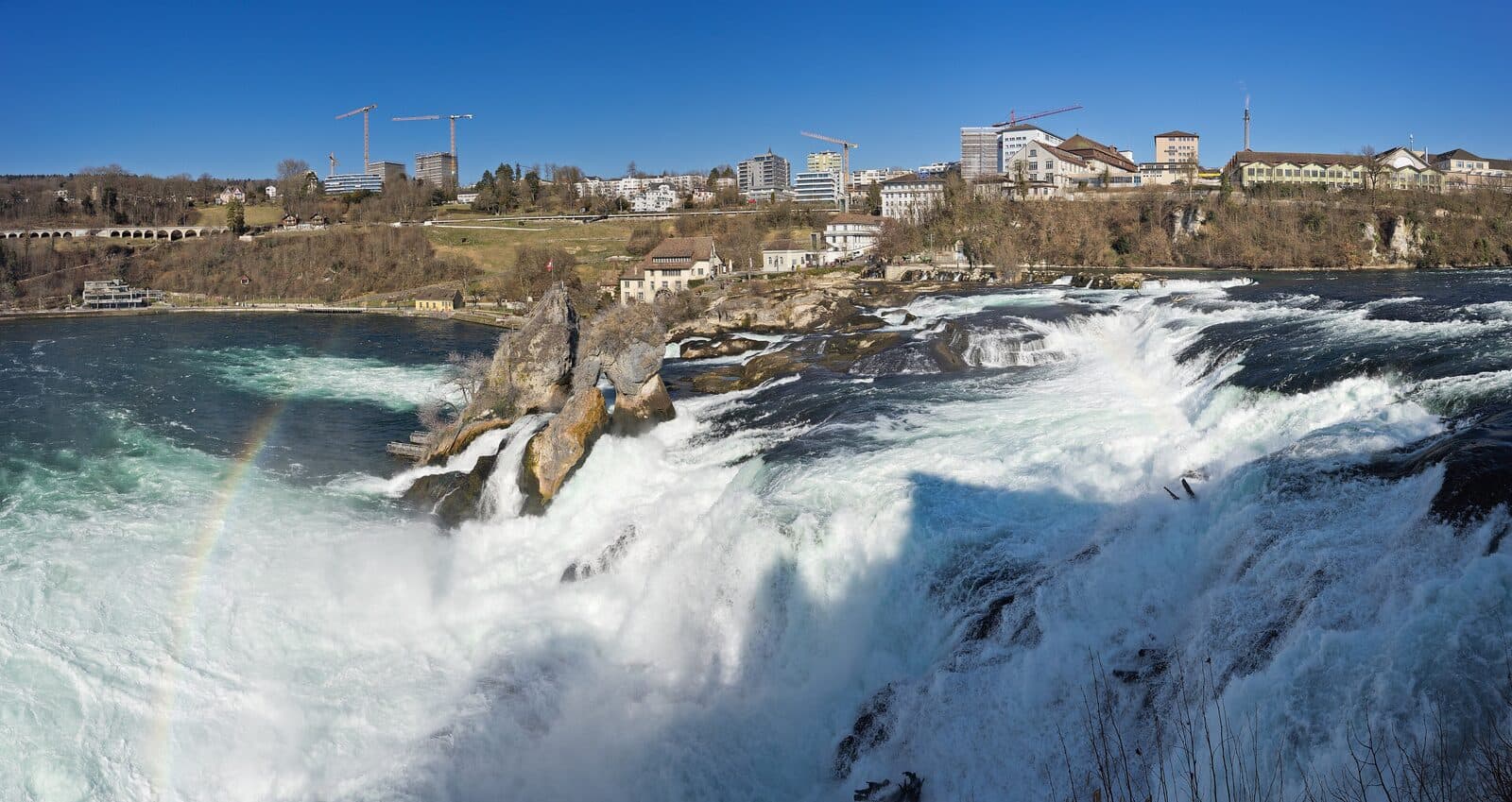
Schaffhausen is Switzerland's northernmost canton. It lies mostly north of the Rhine and is almost entirely surrounded by Germany. The capital is Schaffhausen, and the canton is known for the Rhine Falls near Neuhausen. It has well under one hundred thousand residents, and roughly a quarter of them do not hold Swiss citizenship. The Federal Statistical Office and the cantonal statistical office publish current figures, including rents.
The economy is small but industrial, and many people work across the border with southern Germany. The largest municipalities are Schaffhausen, Neuhausen am Rheinfall and Thayngen.
Your migration office
The Migration Office of the Canton of Schaffhausen handles all foreign-national procedures: B, L, C and G permits, renewals, changes of status and family reunification. It also coordinates asylum and naturalisation matters in the canton.
- Canton portal:
https://www.sh.ch - Office page:
https://www.sh.ch/de/verwaltung/aemter-behoerden/migrationsamt.html - Address, phone, email, opening hours, transport links and online services: on the office page. These change, so rely on the official page.
The law that applies
Schaffhausen applies federal law, like every canton:
- Federal Act on Foreign Nationals and Integration (FNIA, SR 142.20): work (Art. 18 and following), study and training (Art. 27), hardship cases (Art. 30 para. 1 let. b), permits (Art. 33 and 34), family reunification (Art. 42 and following) and break-up of the family (Art. 50).
- Ordinance on Admission, Residence and Gainful Employment (OASA, SR 142.201): hardship criteria (Art. 31), language proof (Art. 60 para. 2, 62 para. 1bis and 77d), family reunification (Art. 73) and the approval procedure (Art. 85 and 86).
- Agreement on the Free Movement of Persons (AFMP, SR 0.142.112.681) and its implementing ordinance (OFMP) for EU/EFTA nationals.
- Asylum Act (AsylA, SR 142.31): allocation to cantons (Art. 27) and advice and legal representation (Art. 102f).
- Swiss Citizenship Act (SCA, SR 141.0) and the separate Citizenship Ordinance (SCO, SR 141.01), which sets the language requirement.
- SEM directives and the federal approval requirement (Art. 99 FNIA).
At cantonal level, the canton's implementing law for the FNIA, its citizenship act and its administrative procedure law apply. Their names and numbers can change; find them in the cantonal systematic compilation of laws at https://www.sh.ch.
For the federal law in more depth, see the FNIA and OASA glossary, the AFMP and OFMP glossary and the Asylum Act glossary.
How long it takes
These are rough guides, not commitments by the office. Time depends on your file, how complete your documents are, the workload and how complex your case is.
| Procedure | Rough guide |
|---|---|
| Baseline (cantonal part) | around 4 weeks |
| First B permit (work, family reunification) | usually longer than the baseline |
| B renewal | usually shorter than the baseline |
| C permit (ordinary or early) | depends on what must be checked; see the cantonal website |
| Family reunification (third country) | depends on what must be checked and on SEM approval |
In some cases the cantonal decision needs approval from the State Secretariat for Migration (SEM) (Art. 99 FNIA with Art. 85 and 86 OASA). The federal procedure then comes on top and can add weeks to months. Current official times are on the cantonal website.
Language requirements
The official language and the language of proof is German. Standard German is tested; Swiss German plays no role.
- Family reunification from a third country: as a rule oral A1 in German on the Common European Framework of Reference for Languages (CEFR), for a B permit.
- Early C permit after five years: oral B1 and written A1 in German (Art. 62 para. 1bis OASA for the skills, Art. 77d OASA for the accepted proofs).
The fide certificate in German is accepted, as are the diplomas listed in Art. 77d OASA, such as telc, Goethe and ÖSD at the right level. Cantons may read the federal minimums slightly differently, so check what the Migration Office currently accepts.
Permits: B, L, C and G
Schaffhausen follows the federal FNIA and OASA and the SEM directives. Permits are governed by Art. 33 and 34 FNIA, and by the AFMP for EU/EFTA nationals.
- B residence permit: for work (third countries: Art. 18 and following FNIA; EU/EFTA: AFMP), for study and training (Art. 27 FNIA) and for family reunification (Art. 42 and following FNIA).
- L short-term permit: for temporary work and other stays with an end date.
- C settlement permit: normally after ten years (Art. 34 para. 2 FNIA). Early after five years if you are well integrated (Art. 34 para. 4 FNIA), with details in Art. 62 para. 1bis and Art. 77d OASA. The canton decides at its discretion and looks for higher language skills, financial independence without social assistance, orderly finances and a clean record. In some cases the SEM must also approve an early C (Art. 99 FNIA); ask the Migration Office.
- G cross-border permit: common here because of the border with southern Germany. It is issued under the AFMP or, for third-country nationals, under the FNIA.
Permits and renewals carry a fee set by the cantonal or federal fee schedule. Check the current amounts with the official sources.
Naturalisation
Naturalisation has three levels, and you must meet all of them: federal approval under the Citizenship Act and Ordinance, citizenship of the canton under the cantonal citizenship act, and citizenship of your municipality.
- Federal: the revised Swiss Citizenship Act, in force since 1 January 2018, requires ten years' residence in Switzerland (Art. 9 SCA) and the integration criteria in Art. 11 and Art. 12 SCA.
- Language: oral B1 and written A2 in a national language, in Schaffhausen German. This is set in the Citizenship Ordinance (Art. 6 SCO), not the Act.
- Canton and municipality: their own residence periods and, where applicable, an interview or integration and knowledge test. These can vary by municipality; see the cantonal compilation of laws and ask your municipality.
See the glossary on the 2018 Citizenship Act.
Asylum
In the accelerated asylum procedure, the first phase takes place in a federal asylum centre in the asylum region. If your case moves to the extended procedure, you are allocated to a canton using the federal distribution key (Art. 27 AsylA). If that is Schaffhausen, you live here and fall under the cantonal asylum coordination.
- Asylum region and federal centre: see
sem.admin.ch. - Free advice and legal representation (Art. 102f AsylA): the organisation mandated for the region is listed on
sem.admin.chand by the Swiss Refugee Council (osar.ch).
Tax at source and your permit
If you work and do not hold a C permit, your employer usually deducts tax at source from your wages. This tax is levied by the canton under harmonised federal and cantonal tax law; in Schaffhausen, the cantonal tax administration is responsible.
If your gross employment income is above the national threshold, currently CHF 120,000 a year, a full tax return (subsequent ordinary assessment) follows automatically, and the tax already deducted is credited. Below that, tax at source is usually final, but you can ask for a full assessment under the legal conditions. Tax at source on your wages ends when you get a C permit or marry a Swiss citizen; you are then taxed normally. The cantonal tax administration can give you rates and thresholds.
For advice on your own case, contact a lawyer entered in the cantonal bar register, a legal advice office for asylum seekers (Art. 102f AsylA) or the cantonal or municipal authority. If you experience domestic violence, which can matter for Art. 50 FNIA, the Victim Support Act (SR 312.5) applies, and the cantonal victim support centres are listed on the cantonal website. For tax questions, ask the cantonal tax administration or a tax adviser.
Related pages
- Cluster of German-speaking standard-practice cantons, which also covers Schaffhausen
- Ci permit for accompanying persons