
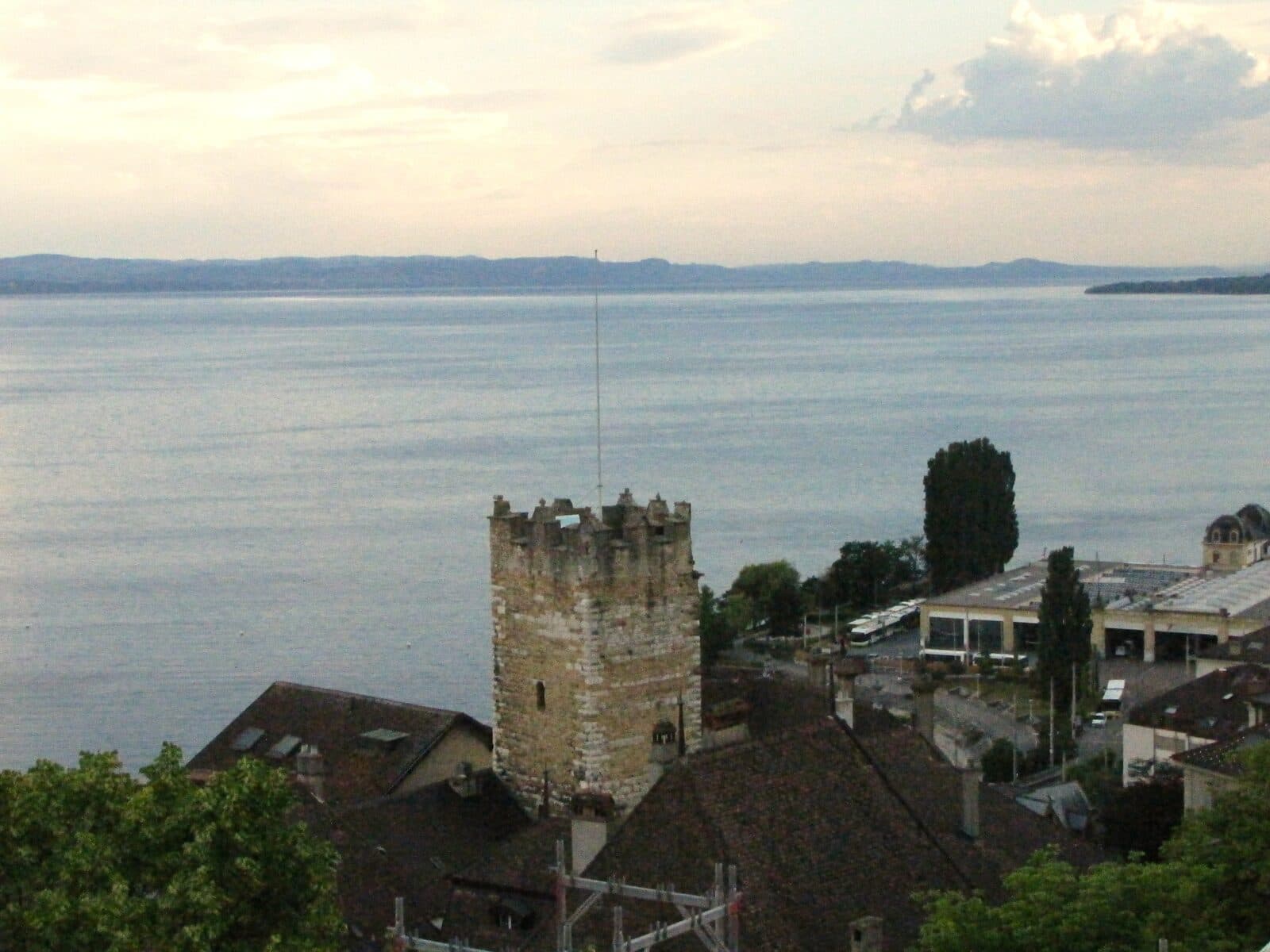
If you live in Neuchâtel, your permits, renewals, family reunification and settlement applications go through the Service des migrations (SMIG), the cantonal migration office. Neuchâtel applies federal immigration law like every other canton, and everything official happens in French. This page explains who to contact, how long things roughly take, what language level you need and how naturalisation works here.
In short
- Your office: the Service des migrations (SMIG). Address, contact details, opening hours, fees and online services are on www.ne.ch/smig.
- Processing time: around six weeks for general processing. First B permits and family reunification from third countries usually take longer.
- Language: French. German does not replace it. Family reunification from a third country usually needs A1 spoken; an early C permit needs B1 spoken and A1 written, and naturalisation needs B1 spoken and A2 written.
- Naturalisation: the Confederation, the canton and your municipality all have to agree.
- Tax: without a C permit you are usually taxed at source; above CHF 120,000 gross a year, an ordinary assessment follows automatically.
Neuchâtel at a glance
Neuchâtel (Neuenburg in German) is a French-speaking canton on the north-western shore of Lake Neuchâtel. Its capital is the city of Neuchâtel. Roughly one quarter of residents are foreign nationals, close to the Swiss average; for current figures, check the Federal Statistical Office (FSO) or the cantonal statistical office.
The economy is built on watchmaking, micro-technology and the Université de Neuchâtel. La Chaux-de-Fonds and Le Locle are on the UNESCO World Heritage List for their watchmaking town planning (Urbanisme horloger).
Which law applies
Neuchâtel applies federal law first:
- the Federal Act on Foreign Nationals and Integration (FNIA, SR 142.20);
- the Ordinance on Admission, Residence and Gainful Employment (OASA, SR 142.201);
- for EU/EFTA nationals, the Agreement on the Free Movement of Persons (AFMP, SR 0.142.112.681) and its implementing ordinance (OFMP, SR 142.203);
- the Asylum Act (AsylA, SR 142.31);
- for naturalisation, the Swiss Citizenship Act (SCA, SR 141.0) and the separate Swiss Citizenship Ordinance (SCO, SR 141.01).
The key provisions are admission for work (Art. 18 FNIA) and for study (Art. 27 FNIA), hardship cases (Art. 30 para. 1 let. b FNIA with Art. 31 OASA), the B permit (Art. 33 FNIA), the C permit (Art. 34 para. 2 and 4 FNIA), changing canton (Art. 37 FNIA), family reunification (Art. 42 to 47 FNIA with Art. 73 OASA), rights after a marriage ends (Art. 50 FNIA), integration (Art. 58a and 58b FNIA), revocation (Art. 62 and 63 FNIA) and SEM approval (Art. 99 FNIA).
The canton adds its own act implementing the FNIA, a cantonal citizenship act and an act on administrative procedure, which sets out how you appeal against SMIG decisions. Check the current versions in the Neuchâtel legislative collection. The glossaries explain the federal terms: FNIA and OASA, AFMP and OFMP and the Asylum Act.
The Service des migrations
The SMIG is the cantonal migration office. Which department it belongs to can change with reorganisations. For the street address, phone, email, counter hours, public transport access and which procedures you can do online, rely only on www.ne.ch/smig. The SEM also lists all cantonal migration offices on www.sem.admin.ch.
The SMIG works in French. Send applications, documents and letters in French. Documents in other languages usually need a certified French translation. The SMIG tells you what else it needs, for example certification or an apostille, and how you may submit.
How long it takes
These are rough guides, not guaranteed deadlines. The time depends on how complete your file is, how busy the office is and how complex your situation is. The SMIG's own information for your case is what counts.
| Procedure | Rough guide |
|---|---|
| General processing | about 6 weeks |
| First B application (work or family reunification) | usually longer |
| B renewal | usually shorter |
| C application (ordinary or early) | within general processing, depending on how much is checked |
| Family reunification (third country) | usually longer, depending on documents and SEM approval |
SEM approval of the cantonal decision (Art. 99 FNIA) is not included and can add weeks to months. Waiting for language certificates or foreign criminal-record extracts can also hold your file until they arrive. Current processing information is on www.ne.ch/smig.
Language requirements
The language that counts in Neuchâtel is French, because the rule follows the official language where you live. Even very good German does not replace French. Levels follow the Common European Framework of Reference for Languages (CEFR).
- Family reunification from a third country: French at A1 spoken, or proof that you have signed up for a suitable language course (Art. 58a and 58b FNIA with Art. 73 ff. OASA).
- Early C permit after five years instead of ten (Art. 34 para. 4 FNIA with Art. 62 para. 1bis and Art. 77d OASA): B1 spoken and A1 written in French, as part of successful integration. Whether and how this applies to EU/EFTA nationals is decided by the SMIG under the current directives.
- Accepted proof: the fide certificate in French and the diplomas listed in Art. 77d OASA. In practice the DELF is among the accepted French diplomas.
Exceptions and the full list of accepted proofs follow from Art. 77d OASA, the fide rules and what the SMIG tells you.
B, L and C permits
Neuchâtel follows the federal rules and SEM directives; there is no special cantonal practice.
- B residence permit: EU/EFTA nationals receive it under the AFMP and OFMP. Third-country nationals are admitted for work under Art. 18 FNIA, subject to labour-market conditions, quotas and SEM approval (Art. 99 FNIA). See the B residence permit.
- L short-term permit: for fixed-term jobs and for education and training (Art. 27 FNIA), including students and researchers at the Université de Neuchâtel. See the L short-term permit.
- C settlement permit: normally after ten years (Art. 34 para. 2 FNIA), or after five with successful integration (Art. 34 para. 4 FNIA with Art. 62 para. 1bis OASA) and the language levels above. See the C settlement permit.
Watchmaking and micro-technology employ many skilled specialists and technicians, so these applications are common. That says nothing about your chances.
Naturalisation
Naturalisation has three levels, and all three must say yes:
- Federal: the naturalisation authorisation under the SCA and SCO.
- Cantonal: citizenship of Neuchâtel under the cantonal citizenship act.
- Municipal: citizenship of the municipality where you live.
The federal conditions:
- Residence and permit: Art. 9 SCA sets a minimum period of residence and requires a settlement permit.
- Suitability: Art. 11 SCA requires integration, familiarity with Swiss life and no threat to security. Art. 12 SCA sets out the integration criteria.
- Language: B1 spoken and A2 written in a national language, in Neuchâtel French. This is set in the ordinance, Art. 6 SCO, not in the act.
The canton and your municipality add their own residence periods. Check the cantonal legislative collection or ask your municipality, since these can change and differ between municipalities. See the 2018 Citizenship Act glossary and naturalisation in Switzerland.
Asylum
The State Secretariat for Migration (SEM) runs asylum procedures. Neuchâtel receives people in the extended procedure under the SEM distribution key (Art. 27 AsylA, SR 142.31).
- Asylum region and federal asylum centre (FAC): Neuchâtel belongs to one of the six federal asylum regions. www.sem.admin.ch shows the region and FAC locations, which can change.
- Legal advice: you are entitled to free advice and legal representation during the procedure, provided by the organisation the SEM mandates for the region (Art. 102f AsylA). Find the current one on www.sem.admin.ch or through the Swiss Refugee Council (OSAR).
See the Asylum Act glossary, the N permit, the F permit and S protection status.
Tax at source
If you hold a B or L permit and no settlement permit, your employer usually deducts tax from your salary (impôt à la source). The canton collects this within federal tax harmonisation and cantonal tax law, and the cantonal tax administration sets the rates.
- Above CHF 120,000 gross a year: a subsequent ordinary assessment is carried out automatically. This threshold applies throughout Switzerland.
- Below the threshold: the withholding tax is usually final, but you can apply for an ordinary assessment.
- Details: ask the Neuchâtel cantonal tax administration about deadlines and rates.
Tax debts or debt enforcement do not by themselves lead to revocation or refusal to renew your permit. They can count in the integration assessment (Art. 58a FNIA), which looks at respect for public order and your financial situation. The revocation grounds in Art. 62 and 63 FNIA are about security and public order, not debts alone.
The tax burden in Neuchâtel is described as rather above average; check with the cantonal tax administration. For tax questions, ask the cantonal tax administration (contact via www.ne.ch) or a qualified tax adviser.
Municipalities and daily life
The largest municipalities are Neuchâtel (the capital), La Chaux-de-Fonds, Le Locle and Val-de-Ruz. Neuchâtel is known for watchmaking, absinthe and its university. Historically, it has given settled foreign nationals certain political rights at municipal level.
Rents are moderate compared with the rest of French-speaking Switzerland. For current rents, use the relevant rent surveys and the FSO.
Getting legal help
This page explains the law. It is not individual legal advice. Which canton handles your case depends on where you live, and moving only to get a better result can be treated as abuse. For a hardship case (Art. 30 FNIA, Art. 31 OASA), family reunification or an appeal, contact a lawyer. The Lawyers Act (LLCA, SR 935.61) governs who may give individual legal advice.